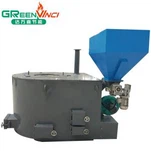


Recently, Greenpeace, an international environmental protection organization, issued a report listing Indonesia's capital Jakarta as "the worst city in Southeast Asia in terms of air quality". As soon as the news came out, Indonesia was shocked all over the country.

The report, Jakarta's Silent Killer, tests air quality in hundreds of cities around the world, ranking Jakarta 161st and the penultimate in Southeast Asia. "The average daily PM2.5 index in 2018 is 45.3, which is 4.5 times and 3 times the ceiling set by the World Health Organization and the Indonesian government respectively," the report said.
According to the report, the biggest cause of air pollution in Jakarta is that exhaust emissions from motorcycles and automobiles exceed environmental carrying capacity, followed by the construction and operation of surrounding thermal power projects in recent years, resulting in excessive emissions of harmful gases and illegal incineration of garbage. Over the years, the Jakarta SAR government has not taken effective measures to control air pollution, nor has public opinion been in place. The 20-year national air quality standards are outdated and far below the WHO guidelines.

To make matters worse, the report says Indonesia's air quality monitoring equipment and technology are seriously inadequate. At present, the Ministry of Environment and Forestry of Indonesia has only one monitoring station at the Jakarta Stadium, which has just hosted the 2018 Asian Games. The Jakarta SAR Government has only set up five small monitoring stations and none of them can provide real-time monitoring data. Jakarta's air quality has never been classified as "conducive to residents'health" since 2017, according to the report's technical support, a software company called Air Vision. Data show that the average daily PM2.5 index in Jakarta is still 42.4 since 2019, which is not conducive to the health of sensitive people.
After the publication of the report, Jakarta Special Administrative Region Chief Executive Anis admitted: "The poor air quality is worrying." Indonesian mainstream media Jakarta Post immediately published articles to introduce the causes of PM2.5 and its haze to human health and living environment. Moreover, Indonesia's economic management departments have begun to study the side effects of increased sick leave, increased hospitalization rate and increased medical and health subsidies on the operation of the national economy. A resident of Jakarta said in an interview: "In the past, he just felt that the air in Jakarta was not good. He told the elderly, children, pregnant women, patients and other special groups to wear masks when they went out. Now it seems that if the city is not affected by tropical oceanic climate and rainy, windy, the result will be more catastrophic.
To this end, most Indonesian insightful people put forward operational rectification programs. First, we should increase the number of monitoring stations and air quality monitoring equipment as soon as possible, not only in Jakarta, but also in the surrounding provinces to prevent the spread of harmful gases across regions. Second, we should increase the research efforts and investment scale of air emissions, focusing on the emission of transportation, coal and electricity, industrial production, family life and other fields. Third, we will accelerate the updating and improvement of air quality standards in Jakarta and even in the whole country, in line with advanced and global standards.

University students in Malang, East Java, Indonesia have independently developed an air quality monitoring technology and equipment called SMOQ, which can be remotely controlled through smartphone applications. Leading inventor Leonard said that SMOQ has four monitoring probes, which can monitor smoke, carbon dioxide, temperature and other key indicators. According to the above indicators, SMOQ gives three ratings: normal, early warning and warning. Data can be uploaded to mobile phone applications in real time, and stored, analyzed and reported. The results of the report can be directly for the government's environmental protection. Departmental reference, the public can also use the results of self-protection.
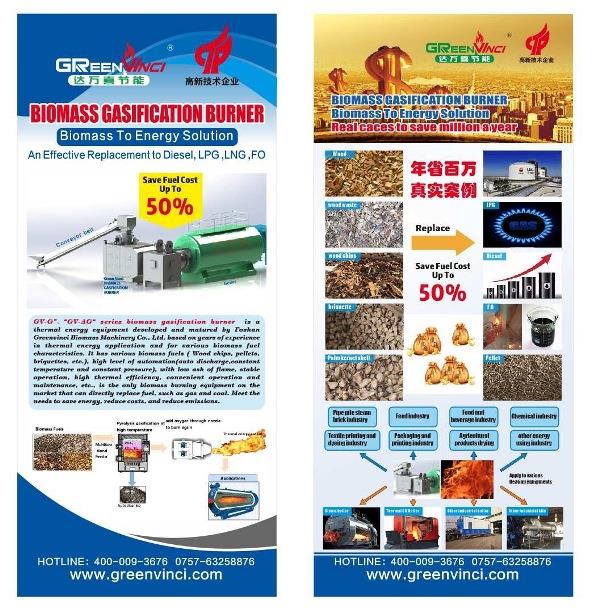
Greenvinci "GV-G" and "GV-AG" series products are developed and maturely applied based on years experience in biomass thermal energy development and application, as well as the characteristics of various biomass fuels.
With the advantages of suitable for various biomass fuels( wood chips, wood waste, pellet, briquettes etc.), high automation( auto feeding, auto discharge, auto constant temperature and pressure), safe and stable operation, clean discharge, high efficiency,low operating and maintenance cost etc., biomass gasification burner now is the only equipment on the market that can directly replace oil, gas and coal to meet the urgent needs for energy saving, cost reduction and emission reduction. The product has gained inventions and patents for a number of innovative technologies independently developed, and won the honor of "Guangdong Province's high-tech products". It has been used in the renovation and supporting projects of over 1000 industrial boilers and kilns.
+86 18144753064